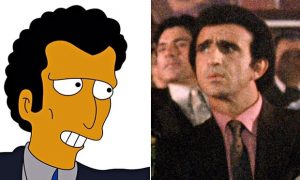

In 2014, actor Frank Sivero, known for playing mobsters Genco Abbandando in “The Godfather II” and Frankie Carbone in “Goodfellas,” filed an intellectual property lawsuit against Fox Television Studios, Inc. (“Fox”). In his suit, Sivero claimed the character “Louie” from the massively successful and popular animated series “The Simpsons” was based on his mobster performances and alleged among other things, common law infringement of right of publicity and misappropriation of name and likeness.
Sivero claimed that not only was “Simpsons” producer James L. Brooks very much aware of who Sivero was and created “Louie” to be based on Frankie Carbone, but that when he developed Frankie Carbone for his role in “Goodfellas,” he was neighbors with writers from “The Simpsons” and told them about his idea of for the mobster, which they subsequently misappropriated for their own “Simpsons” character. At the time of the 2014 lawsuit, “Louie” had appeared in up to sixteen episodes of “The Simpsons.”
In his suit, Sivero claimed that Fox’s infringement was intentional, deliberate and willful and that he should have received compensation for his name and likeness. In all, Sivero sued Fox for $250 million in damages.
In 2015, Sivero’s lawsuit received a huge blow when a Los Angeles Superior Court judge granted Fox’s motion to strike Sivero’s complaint under California’s anti-SLAPP law and ruled that the character “Louie” was protected by the First Amendment. The judge dismissed Sivero’s attorney’s argument that a jury should be able to hear the case, stating that even if an actual photo of Sivero’s real face had been used on “The Simpsons,” it would not survive the motion to strike because as long as it was a parody, Sivero could not prevail.
Last week, Fox scored another victory in the Sivero case when a California state appeals court affirmed the 2015 ruling that the use of the “Louie” character was protected. The appeals court held that Fox’s use of Sivero’s appearance as Frankie Carbone as a parody of stereotypical mobsters as depicted in Hollywood is protected, particularly in this case where “Louie” is not a literal likeness to Sivero’s mobster characters in both “Goodfellas” and “The Godfather II.” Furthermore, the appeals court noted that “The Simpsons” character contains significantly “transformative content,” such as having yellow skin and a high-pitched voice that sounds nothing like Sivero’s or the characters he has portrayed in his films.
There is no question that a person’s right to publicity and name and likeness should receive protections under the law, but when it comes to the First Amendment, parodies used as expressive works on television will likely be protected as free speech, as in the case for the character “Louie.”