

By: Justin McNaughton and David Standa
Last year, Congress began working on new legislation to combat the amount of counterfeit goods being sold through e-commerce sites. The so-called SHOP SAFE Act would impose responsibility on online retailers for establishing certain validation requirements for sellers, the penalty being holding e-commerce sites responsible for counterfeiting occurring on their sites. As Congress continues to debate, more than a dozen members of the Consumer Brands Association sent a letter to congressional lawmakers asking for help in providing protection from misleading cannabis packaging styled after popular commercial brand items. The problem is one that is unique to the cannabis industry, in that it is relatively easy to purchase branded packaging that mimics a famous brand, which is purchased by illicit cannabis growers to package cannabis products. In many instances, an illicit seller will simply buy candy in bulk, purchase branded packaging from an e-commerce seller, and infuse or spray the candy with THC or Delta 8 concentrate. The resulting packaged product is nearly indistinguishable from the actual candy or cereal it mimics. For a more detailed discussion about this problem, see this recent article in Trademark Lawyer Magazine.
In their letter to Congress, the Consumer Brands Association members warned that “children are increasingly threatened by the unscrupulous use of famous brand logos, characters, trademarks and trade dress on THC-laced edible products.” It then went on to say, “while cannabis (and incidental amounts of THC) may be legal in some states, the use of these famous marks, clearly without approval of the brand owners, on food products has created serious health and safety risks for consumers, particularly children, who cannot tell the difference between these brands’ true products and copycat THC products that leverage the brand’s fame for profit.”
Real life examples highlighted in the letter include the following packaging:
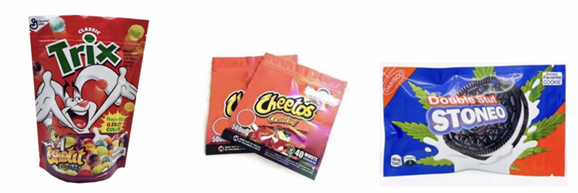
It is easy to see how these packages would be appealing to, and could confuse, young consumers. Indeed, the numbers bear that out, the FDA reported 2,362 THC exposure cases from January 1, 2021, through February 28, 2022. Of those, 41% of exposures involved pediatric patients and 82% of unintentional exposures affected children.
The letter claimed that sales of these products are “widespread online” and that this “unscrupulous practice has pointed out a gap in existing law.” To address this gap, letter signatories proposed a change to the SHOP SAFE Act. Specifically they are looking to add the term famous to the Act so that liability will arise if a “seller uses in commerce a famous or counterfeit mark in connection with the sale, offering for sale, distribution, or advertising of goods that implicate health and safety.”
We aren’t convinced that adding “famous” to the SHOP SAFE Act will solve the problem, and it is a problem. In our opinion, regulating the entire cannabis industry (i.e., federally legalizing marijuana) is the only way to stop this problem. Federal legalization (and regulation) will remove the market for famous-looking packaging because it will create a path for regulated cannabis products to establish their own brands. Unfortunately, we predict that illicit cannabis producers will continue to abuse famous packaging to give their products an appearance of legitimacy until they are forced out into the public market through legalization.
Be sure to follow our blog for more information on these regulations and all cannabis developments across the country. If you have any questions about how to protect your own cannabis trademarks or would like to contact the authors, please email Justin McNaughton ([email protected]) David Standa ([email protected]).